Posts

SOAP Note - Kinesio Tape

Image
Good morning! Today I am going to introduce a slightly different format. This article will be the first in a new style/series of articles that I hope to produce once a month. The format will be based on the medical acronym SOAP. In this series, I will provide 2-4 research articles that have evidence to support opposing opinions (subjective). Then I will add my own personal experience or lessons I’ve learned from others relating to the topic, perhaps on both sides of the argument (objective). I will then offer my personal stance and consideration of the presented information (assessment). Finally, the community response from all of you will provide the “plan”! The first topic of this new SOAP series will be kinesio-tape (K-Tape). SUBJECTIVE: I have two articles cited below. The first one used the application of kinesio tape on the forearm and measured grip strength and force sense in healthy collegiate athletes. In an overview, the study concluded that K-tape had no effect on gri...

Performance vs. Medical

Image
Hello everybody! Today’s SOAP Note will be focused on the blend of the weight room and the athletic training room. I have previously talked about the role of the strength coach being focused on enhancing movement through force production compared to the sport coach who teaches skill. Then there is the athletic trainer/physical therapist who aim to restore mobility in injured athletes through the means of efficient movement. Today I hope to explore both the division and the deep connections between the weight room and the athletic training room. Please note, I do not personally believe all athletic trainers and strength coaches operate this way, nor am I speaking of any specific person. I am only analyzing the demands of each job in a general sense. Let’s begin with the commonalities. Between the three departments of athlete development (medical, performance, and sport) there is really only one goal; to optimize athletic potential in an individual. For each department, that goal me...

How I Approach Injury Prevention

Image
Hello Everybody, Today’s SOAP Note is going to be about injury rates in sports. The field of athletic training is generally moving towards more injury prevention instead of a reaction approach to injuries. The first step in injury prevention is to identify how they happen. I’ve had some recent thoughts I want to share on how and why injuries occur (in a general sense, not a specific mechanism of injury) and my role as an athletic trainer in their prevention. Anytime injury rates are discussed, football always dominates the conversation. Football, ice hockey, lacrosse, soccer, basketball, rugby, these are all high contact sports. When it comes to athlete-athlete collisions, injuries are near impossible to prevent. You can build the perfect athlete with no compensation patterns, ideal muscle balances, incredible strength-to-weight ratio, etc. and as soon as that athlete is hit by another those measurables go out the door. A “perfect athlete” may be able to withstand more forces, but...

3 Departments of Athlete Development

Image
Hello Everybody! Lately, I've given much thought about working with the perfect athlete. In that situation, what role does the athletic trainer play? What role is the strength coach? What about the sport coach? I’ve talked about coaches’ roles before in my “Internal vs. External cues” article. This time I have a slightly different way to look at it. Imagine a group of buddies going on a road trip. The athlete is the vehicle; some are sports cars, some are pickup trucks. In this scenario the pedals and steering wheel are separated in the two front seats. The strength coach controls the gas pedal and brake pedal. They decide how fast or slow the athlete advances. As the road changes (games, practices, time of the season) the strength coach might need to adjust the speed of the car. To consider the body’s ability to adapt and develop I will add that after a while of traveling at certain speeds the car can change. A minivan that continues to run “pedal to the metal” will eventua...

IASTM and how I use it

Image
Hello Everybody! Today I am going to focus on Instrument Assisted Soft Tissue Mobilization (IASTM). Full disclosure, I am M1 Graston Technique certified. I frequently use instrument assisted soft tissue mobilization in my treatments. There are three treatment goals I use IASTM for; 1) increase localized blood flow to the target tissue, 2) increase neural proprioception of a joint or muscle, and 3) decrease myofascial adhesions/malaligned fibrous tissue. Working a lot with baseball athletes leaves my practice prone to “routine treatments”. These are treatments I end up doing just about every day usually with pitchers as part of their process to get ready for sport activity. This often means I will perform Graston Technique on the same target tissue for one guy multiple days in a row. I started to notice that from one day to the next or even one week to the next I could not detect a difference in tissue quality on the athlete. Every time I performed IASTM on the same athlete in the ...

Athlete based treatments

Image
Hello Everybody, In today’s SOAP Note I will discuss routine treatments or as I often call them, “the feel good stuff”. I would classify these as treatments that are performed almost daily on an athlete, or treatments that the athlete asks for based on what they like. Typically with the intent of just making the athlete “feel good” prior to activity without relation to any particular injury. I work mostly with baseball athletes, so most of my discussion will use baseball specific examples but this topic fits with any sport. In my undergrad studies, one thing that was consistently imposed on me was being able to answer the question “why?” this is also something I always reinforce to my students. Part of answering “why” for treatments is being able to justify what treatments you decide to use based on sound medical science. Godforbid you find yourself in court, they will judge you against decisions made by a prudent athletic trainer faced with the same information. This is the reaso...

Internal vs. External Cues

Image
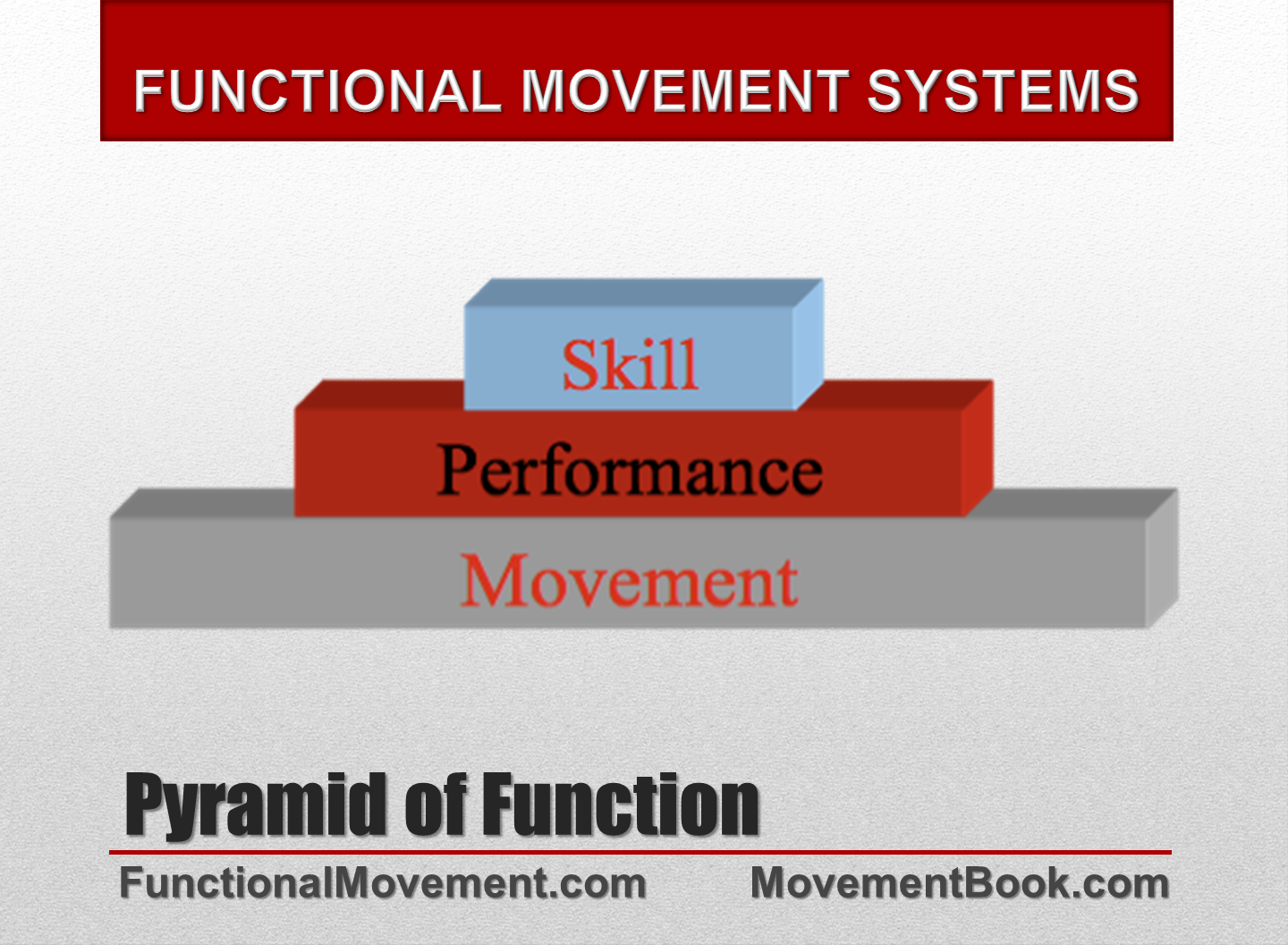
Hello everybody! I’ve previously mentioned Gray Cook and some of his thoughts on how the body moves. Today I am going to discuss how his thoughts mixed with those of Douglas Heel relate to cueing a movement. One thing Gray Cook includes in his FMS program is a pyramid that looks like this: His ideas are that we need to install quality movement before reinforcing that movement by increasing performance. Finally once we have a solid base we can properly teach (sport) skill. After I saw this pyramid, I instantly thought about Douglas Heel’s three body zones presented in his Be Activated series. I created a similar pyramid with Heel’s zones, which looked like this: Notice any similarities? These two pyramids are almost talking about the same thing but from two different approaches. Quality movement begins with zone 1. Power (performance) is produced in zone 2, and skill exists in zone 3. This progression also mimics the relationship between a sport coach, strength coach, and the...